Seasonal tree pruning timing to prepare West Georgia canopies for storm season
A complete seasonal guide for trimming Georgia oaks and pines, including late-winter dormant pruning, summer storm preparation, and post-storm canopy assessments.
The Ideal Pruning Window for Georgia Oaks and Hardwoods
Tree trimming is not just about aesthetics—it is a vital horticultural practice that directly influences tree health, growth vigor, and storm resistance. In West Georgia's humid subtropical climate, timing your pruning cuts correctly makes the difference between a thriving canopy and fungal disease.
For mature hardwoods—including white oaks, southern red oaks, post oaks, and sweetgums—the optimal pruning window is late winter (January through early March) while the tree is fully dormant. Pruning during dormancy minimizes sap loss, eliminates insect attraction, and allows cuts to begin natural wound sealing (compartmentalization) immediately upon spring bud break.
Pruning oaks during the active growing season (April through July) should be strictly avoided whenever possible. Fresh pruning cuts during warm months release volatile aromatic sap that attracts nitidulid sap beetles, which carry dangerous fungal pathogens including oak wilt.
Furthermore, late winter pruning provides clear visibility of the tree's bare branch architecture, enabling our arborists to identify crossed limbs, narrow V-shaped crotches, and internal decay pockets that are hidden during full summer leaf-out.
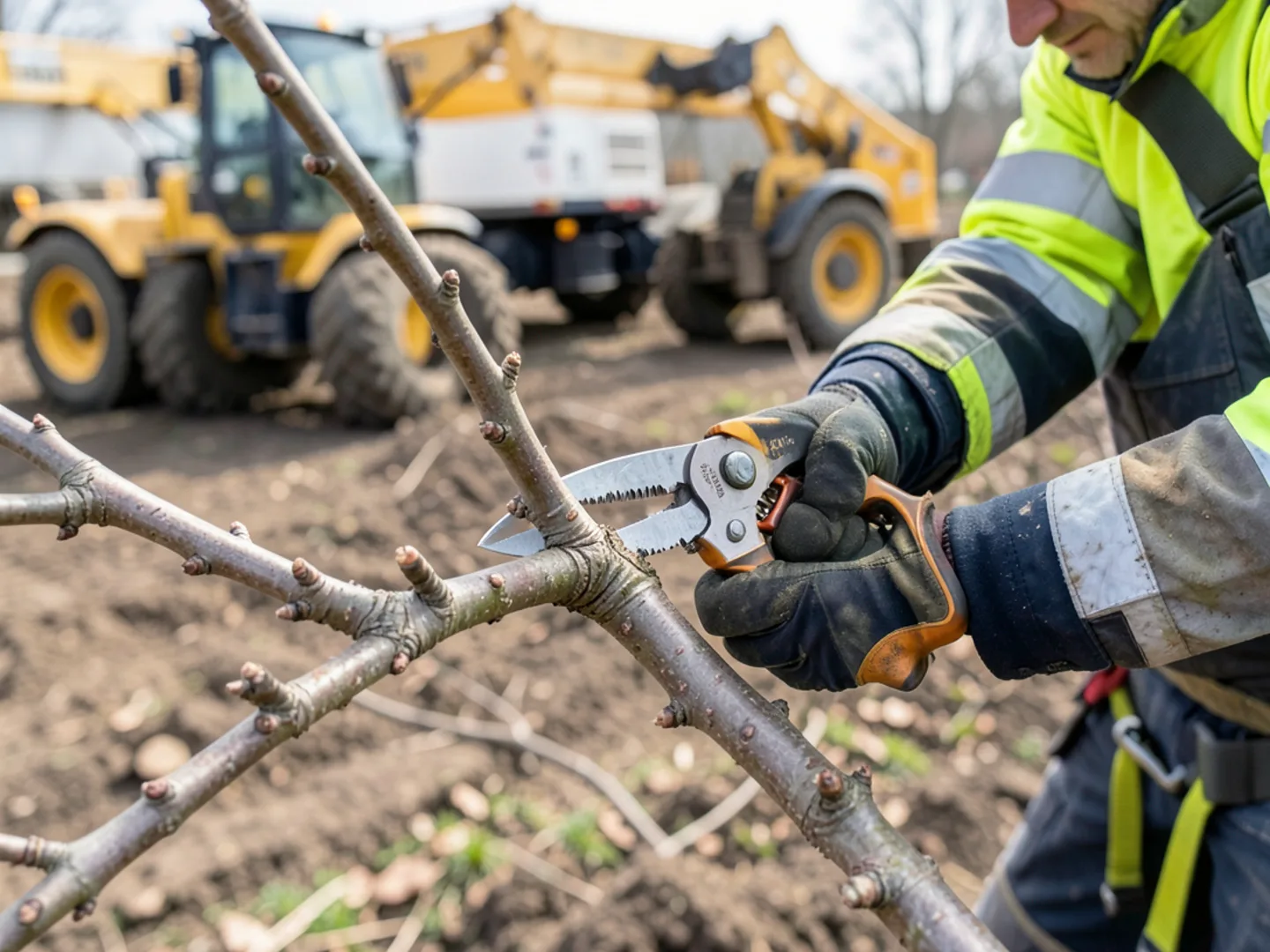
Dormant season pruning in January–February promotes rapid wound closure in spring
Georgia Tree Pruning Calendar: Best Months by Tree Species
Plan your residential tree care according to Georgia's distinct seasonal cycles to maximize tree health and storm defense.
| Tree Species | Optimal Pruning Months | Primary Pruning Goal | Months to Avoid |
|---|---|---|---|
| Oaks (White, Red, Post) | January – Early March | Structural thinning, crown reduction, deadwooding | April – July (Oak wilt risk) |
| Loblolly & Shortleaf Pines | November – February | Deadwooding, lower branch elevation | Mid-summer (Bark beetle stress) |
| Pecan & Hickory | Late Winter (Feb – March) | Scaffolding weight relief, clearance pruning | Late Spring (Nut drop stress) |
| Crape Myrtle & Dogwood | Late Winter (February) | Canopy thinning, sucker removal (No topping!) | Autumn (Triggers frost tender growth) |
| Hazardous Deadwood (Any) | Any month immediately | Eliminating immediate target liabilities | None (Safety always overrides timing) |
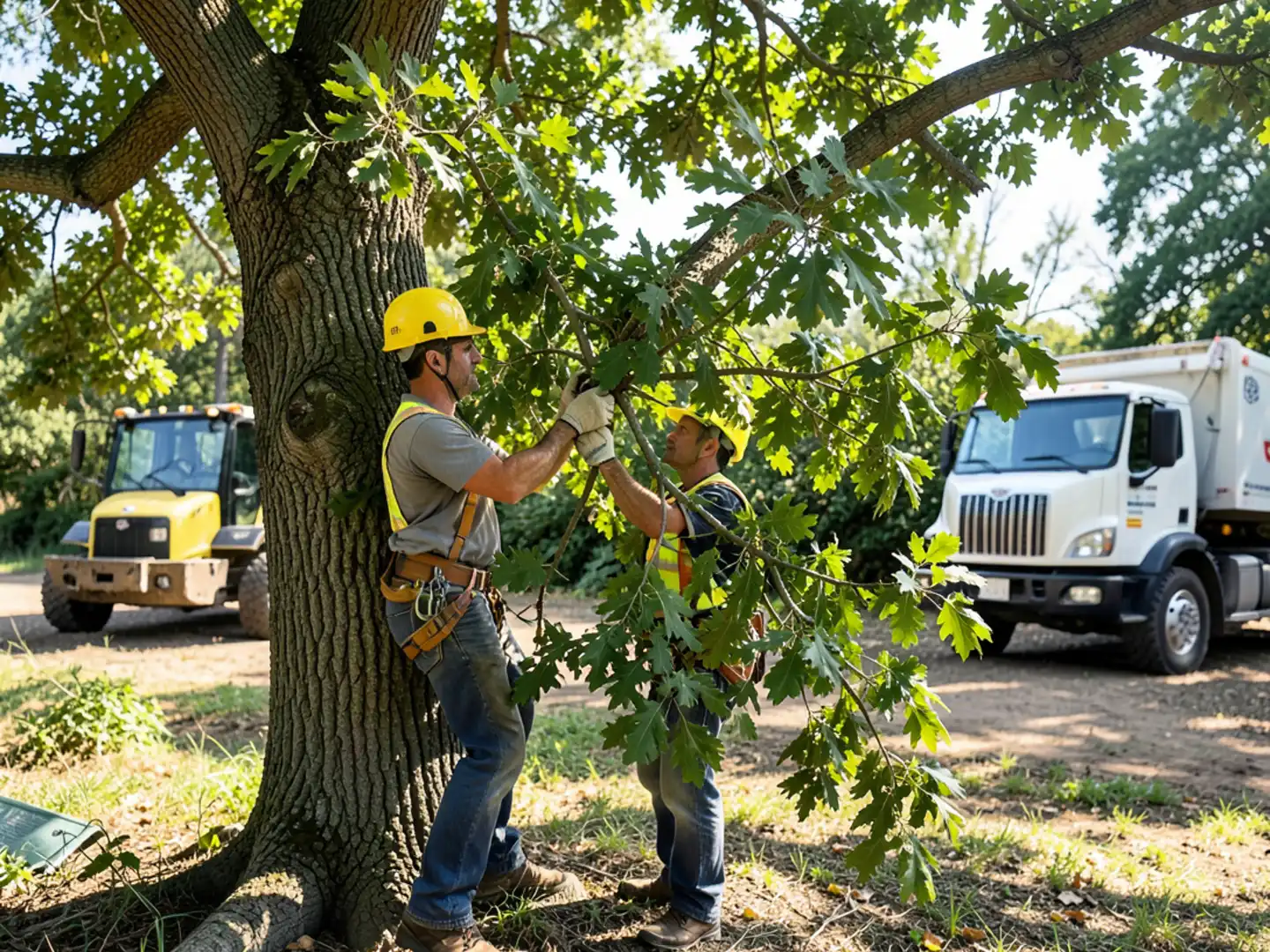
Full leaf flush makes it easy to spot deadwood and brittle overextended limbs
Get immediate advice and transparent pricing from our Newnan tree specialists.
Managing Pine Canopies and Deadwood Before Summer Squalls
While major structural pruning is best done in winter, removing dead, dying, or broken limbs (deadwooding) should be performed as soon as defects are detected, regardless of the season. Dead pine branches dry out, turn brittle, and snap in modest 30 mph winds, endangering vehicles and patio furniture.
Summer pruning should focus on light clearance—elevating branches off roofs, trimming low branches away from driveways, and removing deadwood. Avoid heavy live crown pruning in the heat of July and August, as removing green foliage depletes starch reserves and stresses the tree during drought.
When pruning loblolly pines, never remove more than 20% of the live green crown in a single season. Stripping too many lower limbs creates top-heavy 'poodle-tail' pines that oscillate violently and snap during severe wind gusts.
Additionally, fresh summer pruning cuts on pines release aromatic terpenes that attract southern pine beetles (Dendroctonus frontalis) and ips engraver beetles. Confining pine thinning to late fall and winter allows cut surfaces to seal before adult beetle flights peak in humid summer weather.
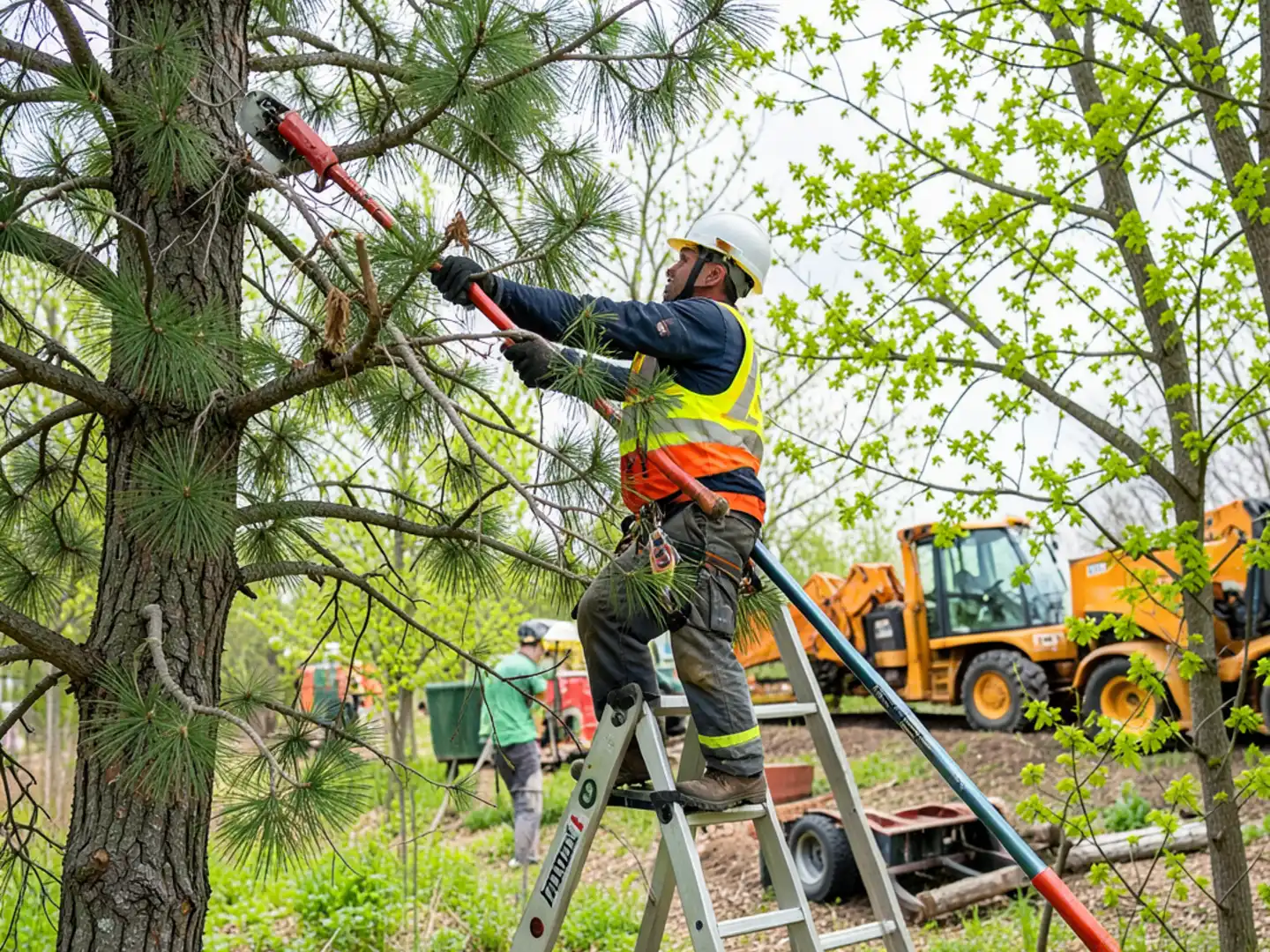
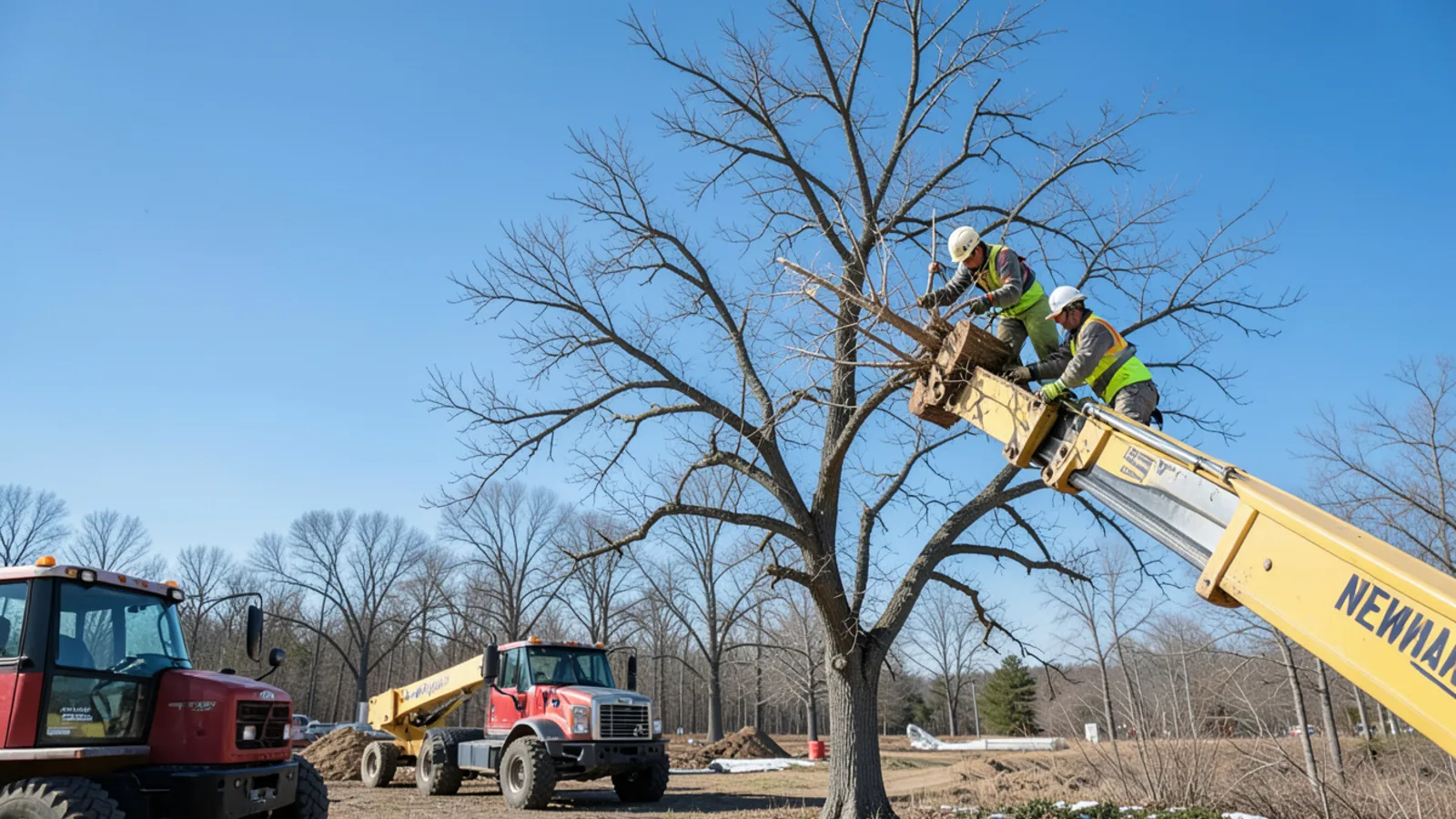
After storms, inspect canopies for dangerous broken limbs lodged in the crown
Understanding Compartmentalization of Decay in Trees (CODIT)
Trees do not 'heal' damaged tissue in the way human skin does; instead, they compartmentalize wounds by creating biological chemical boundaries that seal off decaying wood from newly forming healthy wood.
According to Dr. Alex Shigo's renowned CODIT (Compartmentalization Of Decay In Trees) model, trees form four distinct anatomical walls to resist decay spread:
- Wall 1 (Upward/Downward): Plugs vascular xylem vessels above and below the cut to resist vertical decay spread
- Wall 2 (Inward): Thick-walled latewood cells of the annual growth ring resist inward decay progression toward the pith
- Wall 3 (Lateral): Ray parenchyma cells create chemical radial barriers that prevent fungal organisms from spreading circumferentially
- Wall 4 (The Barrier Zone): Formed by the cambium after injury, this is the strongest biological barrier, separating wounded wood from newly formed wood
The Dangerous Practice of Tree Topping: Why You Should Never Top Hardwoods
One of the most damaging practices in urban tree care is 'tree topping'—the indiscriminate cutting back of tree branches to stubs or lateral branches that are not large enough to assume the terminal role. Homeowners often mistakenly believe topping makes a tall tree safer during storm season; in reality, it achieves the exact opposite.
Topping severely starves the tree by suddenly stripping 50% to 100% of its leaf-bearing crown. In shock, the tree responds by activating dormant latent buds beneath the bark, rapidly producing a dense cluster of upright shoots known as water sprouts or epicormic branches.
Unlike original branch attachments that are deeply socketed into the trunk's growth rings, epicormic shoots are attached only to the outermost layer of wood. These rapidly growing shoots are weakly anchored, structurally defective, and highly prone to snapping off in moderate winds after only a few seasons. Furthermore, the massive blunt cut stubs cannot form protective woundwood, allowing wood rot fungi to travel directly down the trunk.
Rather than topping, Honey Bear Tree Service utilizes ANSI A300 crown reduction techniques, carefully cutting back heavy limbs to lateral branches that are at least one-third the diameter of the limb being removed. This preserves the tree's natural defense zone while effectively reducing sail area and lever arm stress.
Why Late-Winter Dormant Pruning Promotes Rapid Spring Healing
When a tree is dormant in winter, sap flow is minimal and wood-decay fungi are inactive. Making clean cuts outside the branch bark collar during this window ensures that when rising spring temperatures trigger cambial division, the tree immediately begins growing calloused wound wood across the cut surface.
Furthermore, pruning deciduous hardwoods without leaves allows arborists to clearly evaluate the tree's complete branch architecture, identifying crossing limbs, narrow V-crotches, and internal decay that are invisible during lush summer foliage.
Pre-Storm Season Tree Inspection Checklist
Before Georgia's severe thunderstorm season begins in April, walk your property with this practical inspection checklist:
- Check Roof Clearance: Ensure all limbs maintain at least 8 to 10 feet of clearance above shingles and gutters
- Identify Overhanging Deadwood: Look for leafless or broken branches larger than 2 inches in diameter suspended in the crown
- Inspect the Trunk Flare: Verify there is no cracked soil or fungal conks sprouting from the base
- Look for Co-Dominant Trunks: Identify tight V-shaped forks with included bark that require crown weight reduction
- Clear Service Wires: Ensure branches are not rubbing or deflecting electrical service drop lines
Post-Storm Canopy Assessment: Spotting Suspended Hangers
Following high-wind events, tornadoes, or severe thunderstorms, always conduct a post-storm canopy survey. High winds frequently snap upper branches that fail to fall completely to the ground, remaining suspended in the crown (known in the tree industry as 'widow-makers' or hangers).
Suspended branches can remain wedged for weeks before dislodging unexpectedly in mild breezes. If you spot broken branches hanging above driveways, walkways, or play areas, keep family members clear and contact Honey Bear Tree Service to safely rig and remove the hazard.
Call Honey Bear Tree Service at (321) 677-9055 for scheduled seasonal pruning or urgent storm canopy hazard removal across Newnan and surrounding areas.
Frequently Asked Questions About This Topic
Major structural pruning of mature oaks should be avoided from April through July in Georgia. Pruning during warm months produces volatile aromatic sap that attracts nitidulid sap beetles, which are known vectors for fungal vascular pathogens such as oak wilt. If an oak sustains storm damage or has broken branches during summer, arborists make emergency cuts and immediately apply protective pruning sealants strictly to isolate the fresh wound from insect activity.